
Three-position rotary switch electrical symbol: Three independent switches connected by three dashed lines in the center, with three dots added at each position to indicate they are not synchronized.
Introduction
Electrical symbols are graphic symbols used to represent circuit elements and connection methods.
In electrical engineering, electrical symbols are used to conveniently describe and design various circuits.
A three-position rotary switch is a common switching element; it is typically used to control the starting, stopping, and adjustment of circuits.

Working Principle
The three-position rotary switch operates by rotating the knob to connect or disconnect contacts at different positions, thereby controlling the circuit. Each knob features a set of contacts that close or open depending on the knob’s position.
Typically, a three-position rotary switch offers multiple circuit positions, each corresponding to a distinct circuit state. For example, in a three-position rotary switch:
- The first knob’s position may indicate circuit ON/OFF.
- The second knob’s position may indicate forward/reverse direction.
- The third knob’s position may indicate high-speed/low-speed operation.
By rotating knobs to different positions, users can flexibly control circuit states. This design makes three-position rotary switches highly suitable for applications requiring frequent circuit parameter adjustments or selection between different circuit modes.
Basic Structure of a Three-position rotary switch
A Three-position rotary switch typically consists of three knobs, each with a different function.
These knobs can be rotated to different positions to control the state and parameters of the circuit.
The basic structure of a Three-position rotary switch includes the following parts:
1.knob
The knob is the core component of a three position rotary switch, usually made of plastic or metal.
There are scales and markings on the knob,Used to indicate the position and function of the knob.
The knob can be rotated clockwise or counterclockwise to change the shape of the circuit State and parameters.
2.Switch
A switch is one of the main components of a three-position rotary switch, used to control the on/off state of a circuit.
A switch typically has three positions: on, off, and neutral.
In the neutral position, the switch is off, and the circuit is not open.
In the on or off position, the switch is closed, and the circuit is either open or closed.
3.Connecting Terminals
Connecting terminals are another important component of the three-position rotary switch. They are used to connect the switch to other circuit components.
Connecting terminals usually come in multiple units, each with a marking to indicate its function and connection method.
Connecting terminals can be connected to other circuit components via sockets or soldering.Electrical symbol for three-position rotary switch
Three-position rotary switch electrical symbol
The electrical symbol for a three-position rotary switch is a graphic symbol used to represent the switch’s position and function in an electrical circuit. Electrical symbols typically consist of lines and shapes, each element having a specific meaning.
The following is a schematic diagram of the three-position rotary switch electrical symbol:
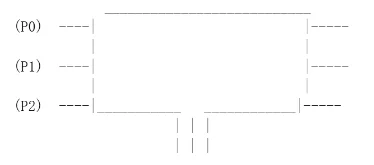
The symbols “P0”, “P1”, and “P2” represent the position indicators of the three knobs, and users can turn the knobs to the corresponding positions to control the circuit as needed.
The electrical symbol for a three-position rotary switch includes the following parts:
1 Knob Symbol
The knob symbol is the core component of the electrical symbol for a three-position rotary switch, used to indicate the knob’s position and function.
Typically depicted as a circle or ellipse, the knob symbol features graduations and markings to indicate the knob’s current position.
The knob symbol may vary depending on different functions and positions.
2 Switches and Symbols
Switches and symbols constitute one of the primary components of electrical symbols for three-position rotary switches, serving to indicate the switch’s state.
Switch symbols typically feature a broken or curved line marked with indicators for the switch’s ON, OFF, and neutral positions.
Switch symbols may vary according to different states.
3 Connection Symbols
Connection symbols constitute another vital part of the electrical symbol for a three-position rotary switch, representing the connection method between terminals and other circuit components.
Connection symbols typically consist of a straight or curved line with arrows at both ends to indicate the direction of the connection.
Connection symbols may vary depending on the specific connection method.
Functions and Applications of Three-Position Rotary Switches
Three-position rotary switches offer flexibility, adjustability, and controllability, making them widely used in various circuits. They can control motor start/stop functions, adjust lighting brightness and color temperature, regulate volume and frequency in electronic devices, and more. These switches also control parameters such as temperature, humidity, pressure, and flow rate.
1 Motor Control
Three-position rotary switches can control motor start and stop functions. Rotating the knob alters motor speed and direction. In industrial automation, these switches commonly regulate mechanical equipment startup, shutdown, and adjustment.
2 Lighting Adjustment
Three-position rotary switches adjust light brightness and color temperature. Turning the knob modifies illumination intensity and hue. In residential and commercial lighting, three-position rotary switches are frequently employed to enhance comfort and ambiance within indoor lighting systems.
3 Volume Control
Three-position rotary switches can regulate volume and frequency in electronic devices.
Rotating the knob adjusts the loudness and pitch of music or voice output.
Within audio and communication equipment, these switches commonly govern sound intensity and quality.
4 Parameter Adjustment
Three-position rotary switches can control parameters such as temperature, humidity, pressure, and flow rate. By rotating the knob, environmental conditions like temperature, humidity, pressure, and flow can be modified. In industrial automation and environmental control systems,three-position rotary switches are commonly used to adjust the accuracy and stability of parameters.
Conclusion
The three-position rotary switch is a common electrical component, characterized by its flexibility, adjustability, and controllability. Rotating the knob changes the state and parameters of a circuit. The electrical symbol of a three-position rotary switch facilitates circuit description and design.
Three-position rotary switches are widely used in motor control, lighting adjustment, volume control, and parameter adjustment. Understanding the structure, electrical symbol, and applications of three-position rotary switches is crucial for electrical engineers and circuit designers.