
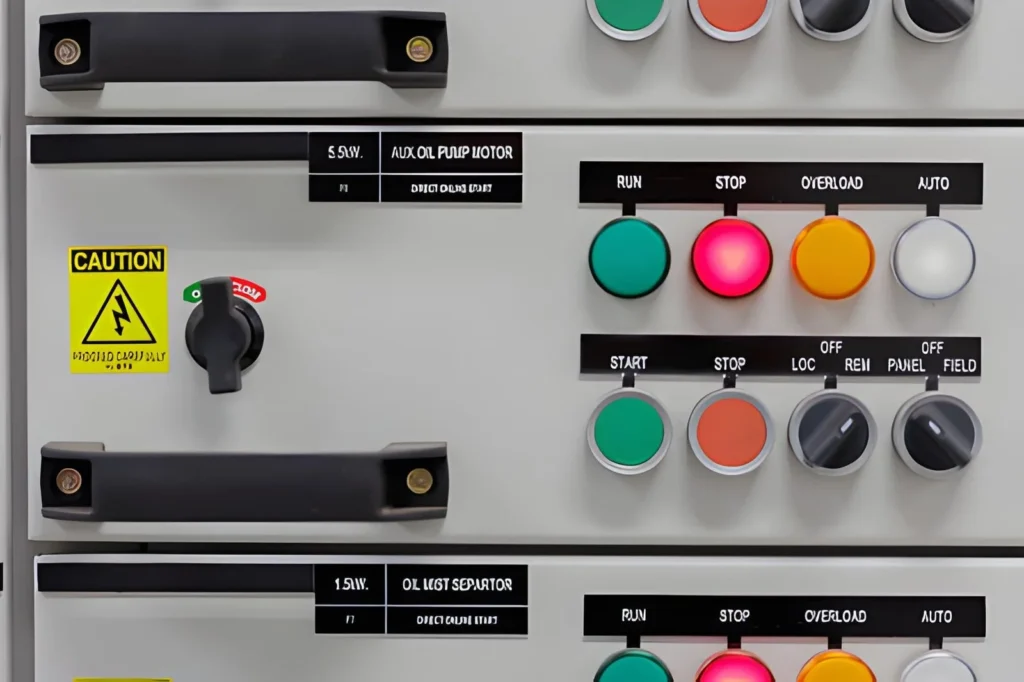
Modern factories rely on PLCs, HMIs, and connected systems. At first glance, it seems everything runs automatically. But that is not the full picture. Even in highly advanced plants, manual control still plays a key role. Equipment may operate on its own most of the time, yet unusual situations always arise. Maintenance work, fault diagnosis, and emergency cases all depend on human intervention. This is where selector switches come in.
If selector switches are used incorrectly or fail to perform reliably, the impact can be serious. Equipment may switch to the wrong mode. Operators may hesitate or make mistakes. Downtime can increase quickly. In more critical situations, safety risks may appear. Selector switches are not just optional components. They are essential for both control and safety.
This article aims to break down the complexity around selector switches. It will explain the main types, outline relevant standards, and highlight the key factors to consider when selecting the right option.
Fundamentals of Selector Switches
Definition and Function
A interruptor selector is a hand-operated device used to open, close, or reroute electrical circuits. Its main role is simple: allow the operator to choose between different machine states.
Common examples include switching between Auto and Manual, Forward and Reverse, or selecting one power source instead of another. The design is straightforward. Turn the handle left, one action happens. Turn it right, something else occurs. The intent is clear, leaving little chance for error.
Core Components
Despite variations in design, most selector switches include three basic elements.
Actuator: This is the part the operator turns, such as a knob, lever, or key. It must provide a solid, confident feel so the user knows the switch has engaged.
Contact Blocks: These handle the electrical function. Contacts may be normally open, normally closed, or adjustable. Their state changes based on the actuator’s position, controlling the circuit.
Mounting System: This secures the switch to the control panel. Standard sizes, such as 22 mm or 30 mm cutouts, are widely used to ensure compatibility.
Difference from Push Buttons
Push buttons work in a temporary way. You press them, and once released, the action stops.
Selector switches behave differently. They hold their position until someone changes it. For example, if a machine needs to stay in Auto mode, a selector switch is the right choice—not a push button.
A Brief Evolution
Selector switches have existed for over a hundred years. Early models were bulky and purely mechanical.
Today’s versions are more advanced. Many are modular. Some include lighting, while others offer programmable features. They may not be as attention-grabbing as newer technologies like smart sensors or cloud systems, but they continue to improve and stay relevant.
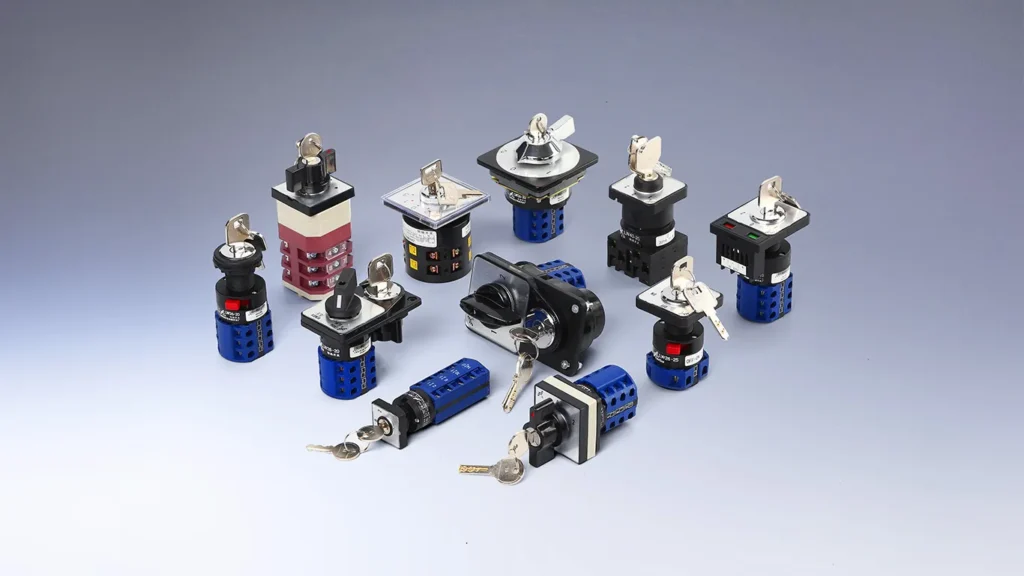
Types of Selector Switches
Selector switches can be understood across three layers. The first looks at how they operate. The second focuses on their design and use. The third involves standards that apply to all types.
Level 1: Fundamental Types (Operating Principle)
This level explains how the switch reacts when used.
- Maintained (Stay-Put):A maintained switch stays in the position where it is placed. It does not move back on its own. The operator must change it again to switch states. This makes it suitable for long-term settings, such as On/Off or Auto/Manual. A wall light switch is a simple example.
- Momentary (Spring-Return):A momentary switch returns to its original position after being released. It works only while being held. This is useful for short actions like testing or jogging a motor. Once released, the system resets automatically. A car horn works this way.
- Combination (Mixed Action):Some switches combine both behaviors. For instance, a three-position switch may hold in two positions but spring back in a third. This allows one device to manage more complex control tasks while saving panel space.
Level 2: Categories of Selector Switches
This level breaks switches down by structure, purpose, and internal design.
1. Rotary Selector Switches
These are the most widely used type. They operate by turning a knob or handle, which connects different contacts inside.
- Wafer Rotary Switches: Built from stacked layers, each controlling separate circuits. They allow multiple connections to change at once. Often used in testing equipment and audio systems.
- Miniature Rotary Switches: Small in size and suited for tight spaces, especially on circuit boards.
- High-Current Rotary Switches: Designed to handle large electrical loads. Common in heavy machinery.
- Rotary Cam Switches: Use a cam mechanism to open and close contacts in a set sequence. Ideal for motor control where order matters.
- Rotary DIP Switches: Found on circuit boards for setting configurations. They often use coded outputs readable by controllers.
- Heavy-Duty Rotary Switches: Built for harsh conditions like dust, moisture, and vibration. Used in industries such as mining and construction.
2. Key Lock Selector Switches
These switches require a key to operate, adding a layer of control and security.
- SPST Keylock: Controls one circuit with a simple on/off action. Only authorized users can operate it.
- SPDT Keylock: Directs one input to one of two outputs. Useful for switching between modes like Local and Remote.
- DPST Keylock: Controls two circuits at the same time. Both turn on or off together.
- Multi-Position Keylocks: Offer three or more positions for selecting different modes. Common in critical systems.
- Illuminated Keylocks: Include built-in lighting to show the current status, improving visibility.
3. Actuator-Based Selector Switches
This group focuses on the physical interface used by the operator.
- Knob-Type: The most common design. Simple, reliable, and easy to use.
- Lever-Type: Features a longer handle for better grip and stronger feedback. Works well with gloves or in rough environments.
- Padlockable (LOTO): Designed for lockout/tagout procedures. A padlock can secure the switch in a safe position during maintenance.
- Illuminated Switches: Use internal lighting to show status clearly, even from a distance.
- Flat or Flush Actuators: Sit close to the panel surface to reduce accidental operation.
- Extended Actuators: Provide extra reach and grip, useful when gloves are worn.
4. Contact Block Arrangements
The contact block controls how electrical connections are made or broken.
- Normally Open (NO): No current flows until the switch is activated. Common for starting functions.
- Normally Closed (NC): Current flows by default and stops when activated. Often used in safety systems.
- Convertible Contacts: Can switch between NO and NC as needed. This adds flexibility without changing hardware.
- Multi-Contact Blocks: Allow one switch to control multiple circuits at once.
5. Application-Specific Selector Switches
Some switches are built for specific tasks.
- Motor Control Selectors: Labeled for functions like Forward, Reverse, and Stop.
- Mode Selectors: Used to switch between Manual, Auto, or Remote operation.
- Ammeter and Voltmeter Selectors: Let one meter measure multiple circuits.
- Changeover Switches: Switch between power sources, such as main supply and backup.
- Emergency or Backup Selectors: Activate alternative systems when the main one fails.
- Interlock Selectors: Prevent unsafe combinations, such as selecting two conflicting modes.
6. Construction and Environment Selector Switches
These switches are grouped by how well they handle different environments.
- General Purpose: For clean and controlled indoor settings.
- Ruggedized: Built to handle impact, wear, and vibration.
- Waterproof and Dustproof: Sealed to block water and dust. Ratings like IP or NEMA define protection levels.
- Explosion-Proof: Safe for areas with flammable gases or dust.
- Washdown-Resistant: Designed for frequent cleaning with high-pressure water.
- Vibration-Resistant: Made for constant movement, such as in vehicles or heavy equipment.
7. Digital and Programmable Selector Switches
Modern designs now include electronic and software-based features.
- Electronic Selector Switches: Replace mechanical contacts with solid-state components, reducing wear.
- Digital Logic-Based Selectors: Act as inputs to control systems like PLCs, with logic handled in software.
- Smart or IoT Selector Switches: Connected to networks, these switches can send data, support monitoring, and enable remote control.
Level 3: Standards Across All Types
Regardless of type, selector switches must follow industry standards. These standards define performance, safety, and compatibility. They ensure that switches work reliably across different systems and environments.
Application Across Industries
In modern industry, selector switches rarely get attention, yet they play a critical role. They may look simple, but they give operators direct control over machines and processes. In many cases, they act as the physical link between human decisions and automated systems. Without them, safe and precise control would be much harder to achieve.
Below is a closer look at how selector switches are used across different sectors.
Fabricación y automatización
In manufacturing environments, selector switches are central to machine control. As automation continues to expand, their role becomes even more important. On production lines, a maintained switch might be used to choose between product modes. A momentary switch, on the other hand, can help an operator make small adjustments, such as moving a robotic arm slightly.
Keylock versions are also widely used. They restrict access so that only trained personnel can change machine settings. This reduces the risk of errors and improves overall safety.
Process Industries
In sectors like water treatment and chemical production, control and safety are tightly linked. Selector switches help manage both. For example, a multi-position switch can direct flow between tanks by controlling several valves at once.
In more sensitive operations, keylock switches prevent unauthorized changes. This is especially important when dealing with hazardous materials. Reliable switching helps maintain stable processes and ensures safety rules are followed at all times.
Utilities and Energy
In power systems, even a small mistake can have serious consequences. Selector switches are used to control critical equipment such as circuit breakers. Keylock designs are common here, as they prevent unauthorized operation.
Rotary switches are also used for measurement tasks. A single meter can be connected to different phases of a system, improving efficiency. As energy systems become more advanced, some selector switches are now integrated with digital platforms for monitoring and remote control.
Material Handling
In warehouses and logistics systems, durability is essential. Selector switches are often exposed to heavy use and tough conditions. They are used to control conveyors, allowing operators to adjust speed or direction easily.
For equipment like cranes, lever-type switches are preferred. They provide strong feedback and are easier to use with gloves. Reliable switching ensures smooth operation and reduces downtime in high-demand environments.
Food and Beverage
Cleanliness is a top priority in this industry. Selector switches must handle frequent washing and harsh cleaning conditions. Washdown-resistant designs are built with sealed housings to block water, steam, and chemicals.
These switches protect internal components while allowing strict hygiene standards to be met. This helps prevent contamination and keeps production safe.
Transportation
In transport systems, constant movement and vibration are unavoidable. Selector switches used here must remain stable under these conditions. Vibration-resistant designs ensure consistent performance.
For example, in trains or heavy vehicles, lever-type switches are often used. They provide a clear, physical response, which helps operators stay in control even in noisy or unstable environments.
Commercial Buildings
Selector switches are also common in building systems. They are used to manage lighting and HVAC equipment. A multi-position switch might control fan speeds or cooling settings in different zones.
Illuminated switches are especially useful in these settings. They show system status at a glance, helping technicians quickly understand whether equipment is running or not. This improves efficiency and simplifies maintenance.
Advantages of Selector Switches
- Simple and Clear Operation:Selector switches allow operators to choose machine modes quickly and with confidence. The positions are easy to understand, which helps reduce operating errors.
- Strong and Dependable:These switches are built for demanding environments. They can handle vibration, dust, moisture, and constant use, maintaining stable performance over time.
- Flexible Use:With different positions, actuator styles, and contact setups, one switch can handle multiple tasks. This makes them efficient and space-saving.
- Improved Safety:Design features such as interlocks and lockable actuators help prevent unintended actions. This protects both workers and equipment.
- Support for Smart Systems:Modern selector switches can connect with control systems like PLCs or cloud platforms. This allows remote tracking and supports predictive maintenance.
- Adaptable to Conditions:They are available in designs suited for harsh settings, including waterproof, dustproof, explosion-resistant, and washdown-ready versions.
- Cost Savings Over Time:Their durable build and modular structure reduce the need for frequent replacement. This lowers maintenance effort and overall cost.
- Easy for Operators to Use:Thoughtful design elements, such as ergonomic handles, lighting, and clear labels, improve usability and reduce fatigue during long shifts.
Technical Considerations for Selection
Selecting a suitable selector switch is not a trivial task. It goes beyond choosing a simple control device. You need to evaluate electrical performance, environmental resistance, and operator usability together. A well-chosen switch improves safety, ensures reliability, and keeps operation straightforward.
Below are the key technical aspects to review.
Electrical Ratings
This is the first and most important factor. The switch must match the electrical demands of the circuit.
- Voltage:The rated voltage of the switch should meet or exceed the system voltage. If it is too low, issues like arcing or failure may occur.
- Current:The current rating must handle the maximum load. An undersized switch can overheat, creating safety risks and shortening its lifespan.
- AC vs DC:The switch must be designed for the correct type of current. AC and DC behave differently during switching, so using the wrong type can lead to poor performance or damage.
Configuración de contactos
The contact setup determines how the circuit behaves when the switch is used.
- Normally Open (NO):The circuit is off by default and turns on when the switch is activated. This is common for starting functions.
- Normally Closed (NC):The circuit is active by default and turns off when the switch is used. Often applied in stop or safety systems.
- Convertible Contacts:These can be adjusted between NO and NC. This flexibility allows quick changes without replacing the switch.
Mechanical Durability
Physical design affects how long the switch will last and how it performs in daily use.
- Torque Requirements:The force needed to operate the switch should be balanced. Too light may cause accidental use. Too heavy can strain the operator.
- Operator Feedback:A clear tactile response is important. A noticeable click helps confirm that the switch has moved into position, especially in noisy environments.
Panel Cutouts
Installation depends on proper sizing.
- Standard Dimensions:Most switches follow common sizes like 22 mm or 30 mm. Using standard cutouts simplifies installation and makes replacement easier across different brands.
Environmental Needs
The surrounding conditions can strongly affect performance.
- Dust and Water Protection:Switches used in harsh areas should have proper IP or NEMA ratings. Higher ratings offer better protection against dust and moisture.
- Hazardous Locations:In industries such as oil, gas, or chemicals, switches must be certified for explosive environments. These designs prevent internal sparks from causing ignition.
- Vibration Resistance:For moving equipment or transport systems, the switch must stay stable under constant vibration.
Operator Ergonomics
The design should support ease of use.
- Use with Gloves:If gloves are required, the actuator should be large and easy to grip. Lever or extended types are often better choices.
- Visibility:In dim environments, illuminated switches help show status clearly. Labels should also be easy to read.
- Accessibility:The switch should be placed where it is easy to reach. The actuator type should match the layout. Flush designs help avoid accidental contact, while extended ones improve visibility and control.
Conclusión
A selector switch is a basic control device that allows an operator to choose between different machine modes, such as switching from “Auto” to “Manual.” Even in highly automated environments, these switches remain essential, especially for maintenance tasks and emergency situations.
Unlike push buttons, which only function while being pressed, selector switches hold their position until they are deliberately changed. They are available in many forms, including key-operated versions for added security and designs built to withstand harsh conditions like dust, moisture, or heavy use.
Looking ahead, digital interfaces will continue to take over more complex operations. However, selector switches will still play a key role in critical control tasks. Future designs will not only be more durable but also more intelligent, with the ability to connect to control systems and provide data that helps prevent